
 By
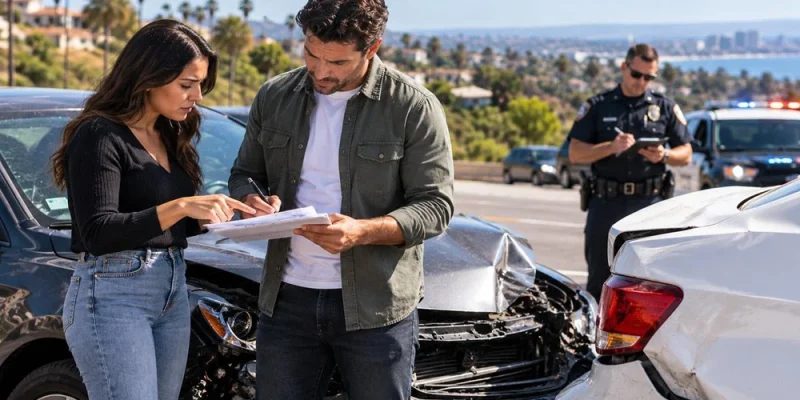
Since January 1, 2025, California drivers must carry at least 30/60/15 liability insurance: $30,000 per injured person, $60,000 per accident, and $15,000 for property damage. It’s double the old minimum, but a single hospital stay can exceed it. The limits rise to 50/100/25 in 2035. Your best protection when the other driver carries the minimum is your own underinsured motorist coverage, set at limits well above the minimum.
Introduction
Maybe you just found out the driver who hit you carries the state minimum. Or maybe you’re renewing your policy and wondering whether the cheapest option is good enough. Either way, the California minimum insurance 30/60/15 standard sounds like a lot of money until you see what a serious crash actually costs.
California raised its minimums in 2025 for the first time in decades, and that was a real improvement for injured people. But a minimum is exactly that: the least a driver can carry and still be legal. It was never designed to cover the full cost of a serious injury.
What 30/60/15 Actually Means
The three numbers describe the minimum liability coverage every California driver must carry. Liability insurance pays for injuries and damage you cause to others, not your own. The first number is the maximum the policy pays for one injured person, the second is the maximum for all injured in one crash, and the third is for property damage.
Broken down:
- $30,000 for bodily injury or death to any one person
- $60,000 for bodily injury or death to all people in one accident
- $15,000 for damage to other people’s property, usually their vehicle
These limits come from Senate Bill 1107, the Protect California Drivers Act, which took effect on January 1, 2025. Before that, California’s minimum was 15/30/5, and those numbers hadn’t changed since 1967. The same law schedules another increase to 50/100/25 starting in 2035.
The new law also raised the minimum limits for uninsured and underinsured motorist coverage to $30,000 per person and $60,000 per accident on policies that include it.
Why the Minimum Often Falls Short After a Serious Crash
For minor fender benders, 30/60/15 is often enough. For serious injuries, it usually isn’t. An ambulance ride, ER visit, imaging and a few days in the hospital can approach or exceed $30,000 on their own before counting surgery, rehab, lost wages, or pain and suffering.
The per-accident limit creates another squeeze. If three people are hurt in the same crash, they share a $60,000 pool. One person’s serious injuries can use up most of it, leaving the others with little.
Property damage has the same problem. Many vehicles on Southern California roads cost far more than $15,000 to replace, and a multi-car pileup on the 5 or the 91 can exhaust that limit on the first car. When the property damage limit runs out, the injured owner looks to their own collision coverage or to the at-fault driver personally.
A minimum policy makes a driver legal. It doesn’t make an injured person whole.
The Risk to You If You Cause a Serious Crash
If you cause a crash and the damages exceed your policy limits, you can be personally responsible for the difference. The injured person can sue you, and a judgment above your coverage may be collected from your income or assets. Higher limits protect the people you hit and your own financial future.
Most claims settle within policy limits, and many injured people choose not to pursue an individual’s personal assets. But that isn’t guaranteed, especially when injuries are catastrophic or the at-fault driver owns a home or has significant savings.
That’s one reason many drivers choose limits well above the minimum, and some add an umbrella policy. The right amount depends on your assets, income and budget. An insurance agent or broker can walk you through options. This article isn’t insurance or financial advice, just the context you need to ask better questions.
Some drivers can legally carry even less than 30/60/15. Income-eligible drivers enrolled in California’s Low Cost Automobile Insurance Program may carry lower limits, which means a person hurt by one of those drivers may find even less coverage available.
Underinsured Motorist Coverage: Your Protection Against Minimum-Limits Drivers
Uninsured motorist (UM) and underinsured motorist (UIM) coverage are part of your own policy. They pay for your injuries when the at-fault driver has no insurance or too little. California insurers must offer this coverage, and you can only reject it in writing. For many injured people, it’s the coverage that makes the real difference.
Here’s the part most people don’t know. In California, underinsured motorist coverage generally pays the difference between your UIM limit and the at-fault driver’s liability limit. It doesn’t stack on top. So if you carry $30,000 in UIM and the driver who hit you carries $30,000 in liability, your UIM may pay nothing at all.
Now change one number. If you carry $250,000 in UIM coverage and a minimum-limits driver hits you, your own policy may cover up to $220,000 more after the other driver’s $30,000 is paid. Same crash, very different outcome.
UM coverage also protects you in hit-and-run crashes and when the other driver is uninsured, which still happens regularly in California. Many policies extend UM and UIM protection to you as a pedestrian, a cyclist or a passenger in someone else’s car.
If your UIM limit matches the state minimum, it may pay you nothing against a minimum-limits driver.
What to Do If You Were Hit by a Driver With Minimum Insurance
If the at-fault driver carries only 30/60/15 and your damages are higher, don’t assume $30,000 is all you can recover. Other sources may include your UIM coverage, a second at-fault party, an employer’s commercial policy, rideshare coverage, an umbrella policy, or your own MedPay and health insurance.
A few practical steps help:
- Request the policy limits. California law provides a process for an injured person’s lawyer to request the at-fault driver’s limits, so you know what you’re working with.
- Review your own policy. Check your UM, UIM, and medical payments coverage, and notify your insurer of a possible UIM claim promptly.
- Look for other liable parties. Was the driver working? Driving for a rideshare app? Was another vehicle or a road defect involved?
- Don’t settle too fast. Accepting the at-fault driver’s limits without following your UIM policy’s procedures can jeopardize your UIM claim.
- Track every cost. Medical bills, lost wages and out-of-pocket expenses all count toward the value of your claim.
The UIM step deserves care. Your own insurer becomes the party you’re negotiating with, and it may evaluate your injuries just as skeptically as the other driver’s carrier would. California UIM disputes often go to arbitration rather than court.
Most injury lawsuits against the at-fault driver must be filed within two years of the crash, and UIM claims have their own policy and statutory deadlines.
How a Car Accident Lawyer Helps When Coverage Is Thin
When the at-fault driver carries the minimum, a car accident lawyer’s most valuable work is often finding the money. That means confirming policy limits, identifying every other insurer that might pay, handling your UIM claim correctly, and building a full record of your damages for each one.
A lawyer also manages the order of operations, such as when to accept a liability policy’s limits, how to get your UIM insurer’s consent, and how health insurance or Medi-Cal liens affect what you take home. Mistakes here can cost thousands of dollars. No lawyer can guarantee an outcome, but you won’t leave coverage on the table by accident.
Learn more about our car accident practice and our broader personal injury work, with offices serving Orange County and the Inland Empire.
The Bottom Line on 30/60/15
California’s 30/60/15 minimum is better than the old 15/30/5, but it’s still a floor, not a safety net. If a minimum-limits driver hurt you, look beyond their policy, starting with your own UIM coverage. If you’re reviewing your own policy, consider how your liability and UIM limits would hold up in a serious crash.
Been in an accident or hurt on the job? You don’t have to navigate insurance companies alone. Oracle Law Firm fights to get you the compensation, control, and clarity you deserve.
Get a Free Consultation or call 888.597.4099.
Disclaimer: This article is for general information only and is not legal, insurance or financial advice. Reading it does not create an attorney-client relationship. Every case depends on its own facts, and past results do not guarantee future outcomes.
Frequently Asked Questions
What does 30/60/15 mean in California car insurance?
It’s California’s minimum liability coverage: $30,000 for injuries to one person, $60,000 for injuries to everyone in one accident, and $15,000 for property damage. These limits took effect January 1, 2025, under SB 1107, replacing the old 15/30/5 minimum.
Will California’s minimum insurance go up again?
Yes. Under SB 1107, California’s minimum liability limits are scheduled to rise to 50/100/25 starting January 1, 2035. That means $50,000 per person, $100,000 per accident, and $25,000 for property damage.
Does minimum liability insurance cover my own injuries?
No. Liability insurance pays for injuries and damage you cause to other people. To cover your own injuries, you need coverage such as uninsured and underinsured motorist coverage, medical payments coverage, or health insurance.
What happens if my damages exceed the at-fault driver’s policy limits?
You may be able to recover the rest from your own underinsured motorist coverage, another at-fault party, an employer’s or rideshare policy, or the driver personally. In California, UIM generally pays the difference between your UIM limit and the at-fault driver’s limit.
Is uninsured motorist coverage required in California?
California insurers must offer uninsured and underinsured motorist coverage, but you can reject it in writing. Because it protects you when the other driver has little or no insurance, many drivers keep it at limits well above the state minimum.








Comments